

How Ben Proud Sets Up for Speed
For a sprinter, the goal isn’t just to look pretty on the blocks. The goal is to create the most force in the shortest amount of time while setting up the cleanest entry possible.
Here’s what I look for:
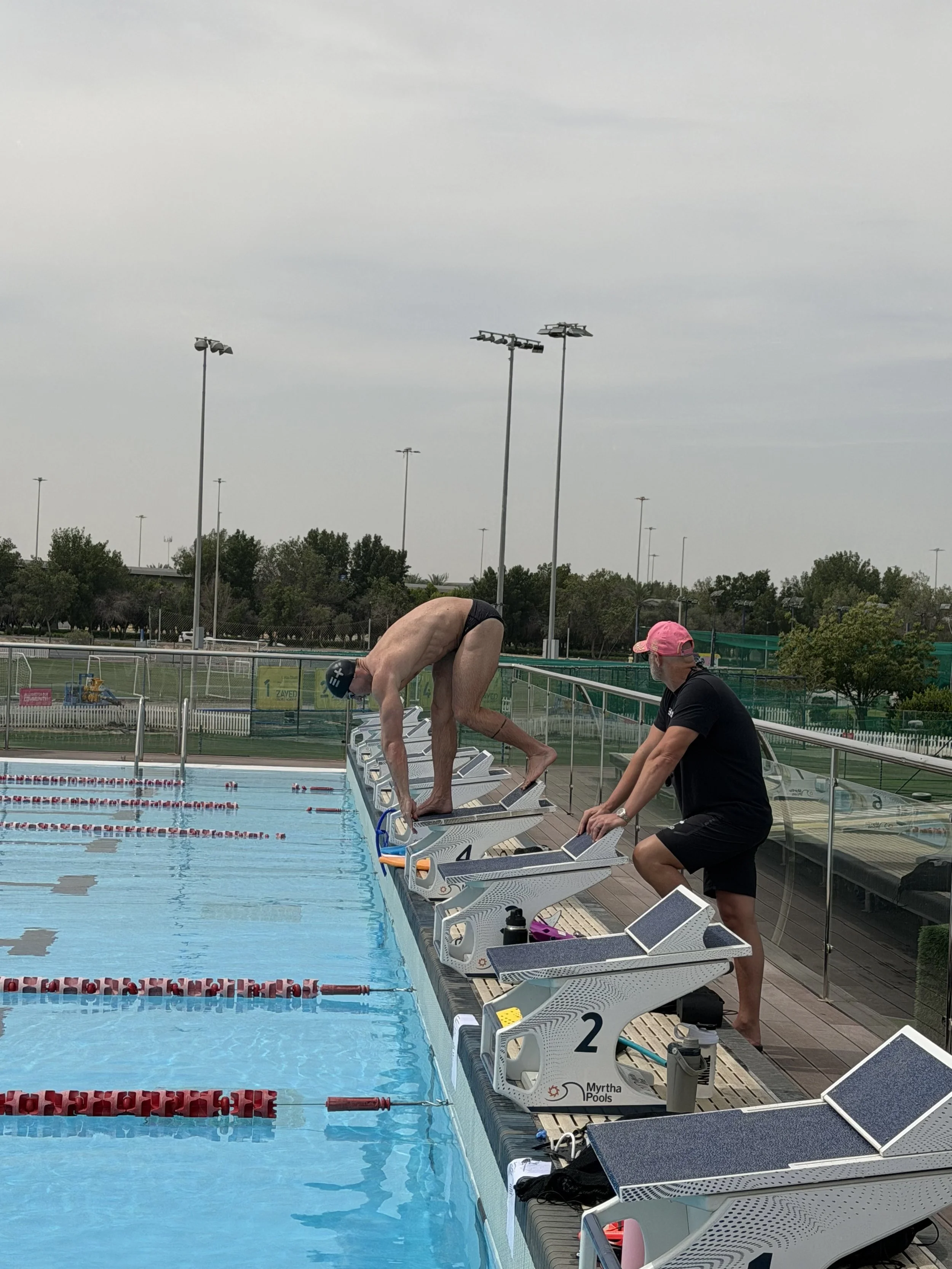
Front foot: Solid and stable, with the toes wrapped over the front edge. It should feel like you’re ready to attack the block, not balance on it.
Back foot: Firm against the wedge, heel up, positioned so you can generate maximum horizontal force. Most sprinters perform best with the wedge in the middle-to-back positions, but it should match the athlete’s strength and mobility.
Weight distribution: Roughly 60–70% over the front foot. Your center of mass should already be moving toward the water before the gun.
Hip height: Hips above the shoulders, creating a forward lean without sacrificing stability. Too low and you lose power. Too high and you become unstable.
Shoulders: Directly over or just beyond the hands. This keeps your body loaded forward and reduces reaction time.
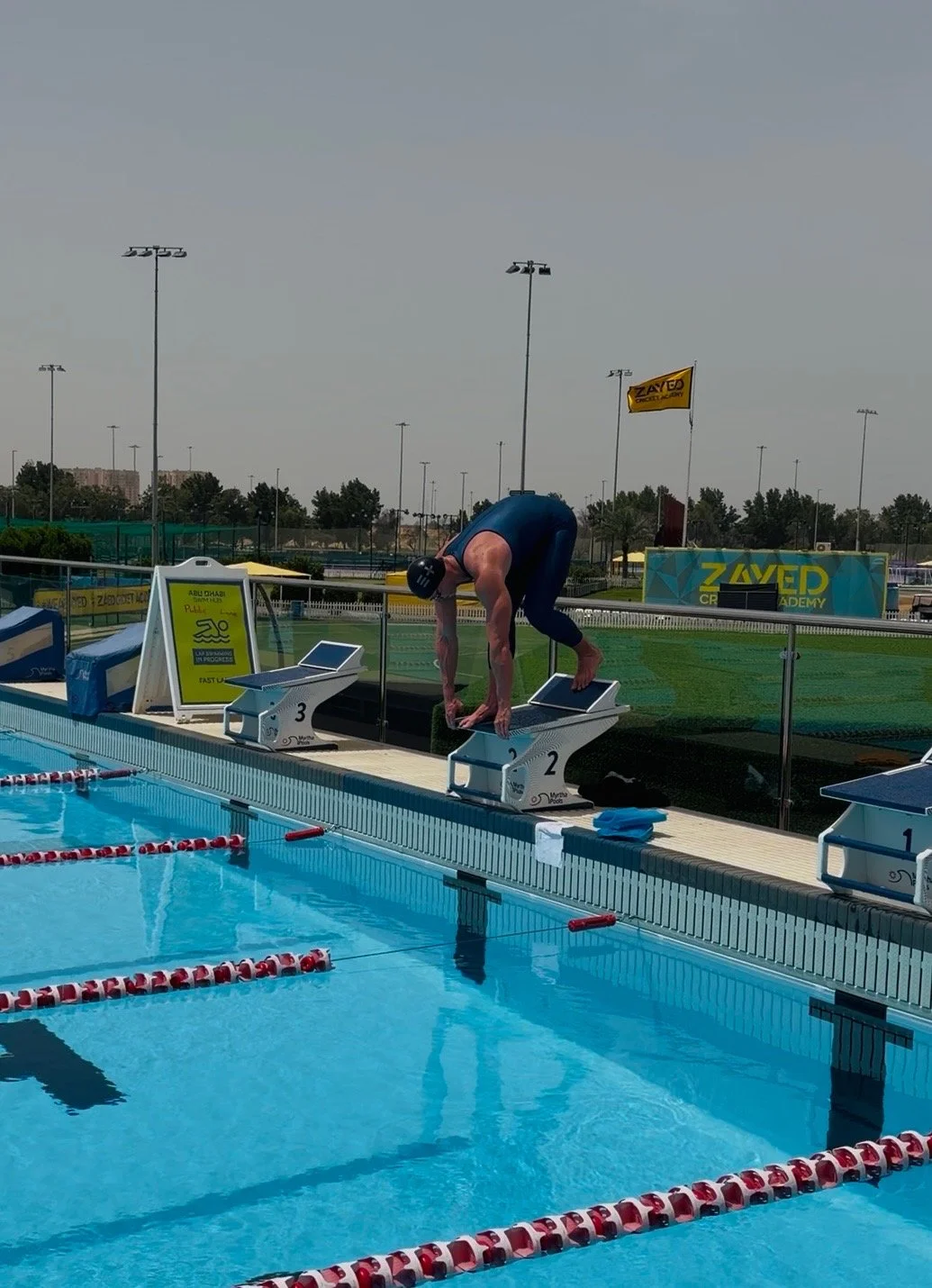
Arms: Straight but relaxed. You’re supporting your body, not pulling on the block.
Head and eyes: Neutral neck with eyes looking down toward the front edge of the block. Don’t look at the far wall.
Muscle tension: Enough tension to be explosive, but not so much that you’re rigid. Think “coiled spring,” not “locked up.”
Stillness: Once you’re set, eliminate unnecessary movement. The quieter you are, the faster you’ll react.
For me, Ben Proud’s start is feared because it isn’t just fast, it changes the race before anyone has taken a stroke.
Here are the biggest reasons why:
The block setup is repeatable. Ben gets into the exact same position every race. No wasted movement, no searching for balance. His setup allows him to explode the instant the gun goes.
He creates horizontal velocity immediately. He isn’t trying to jump high. Every ounce of force is directed down the pool, giving him exceptional speed before he even enters the water.
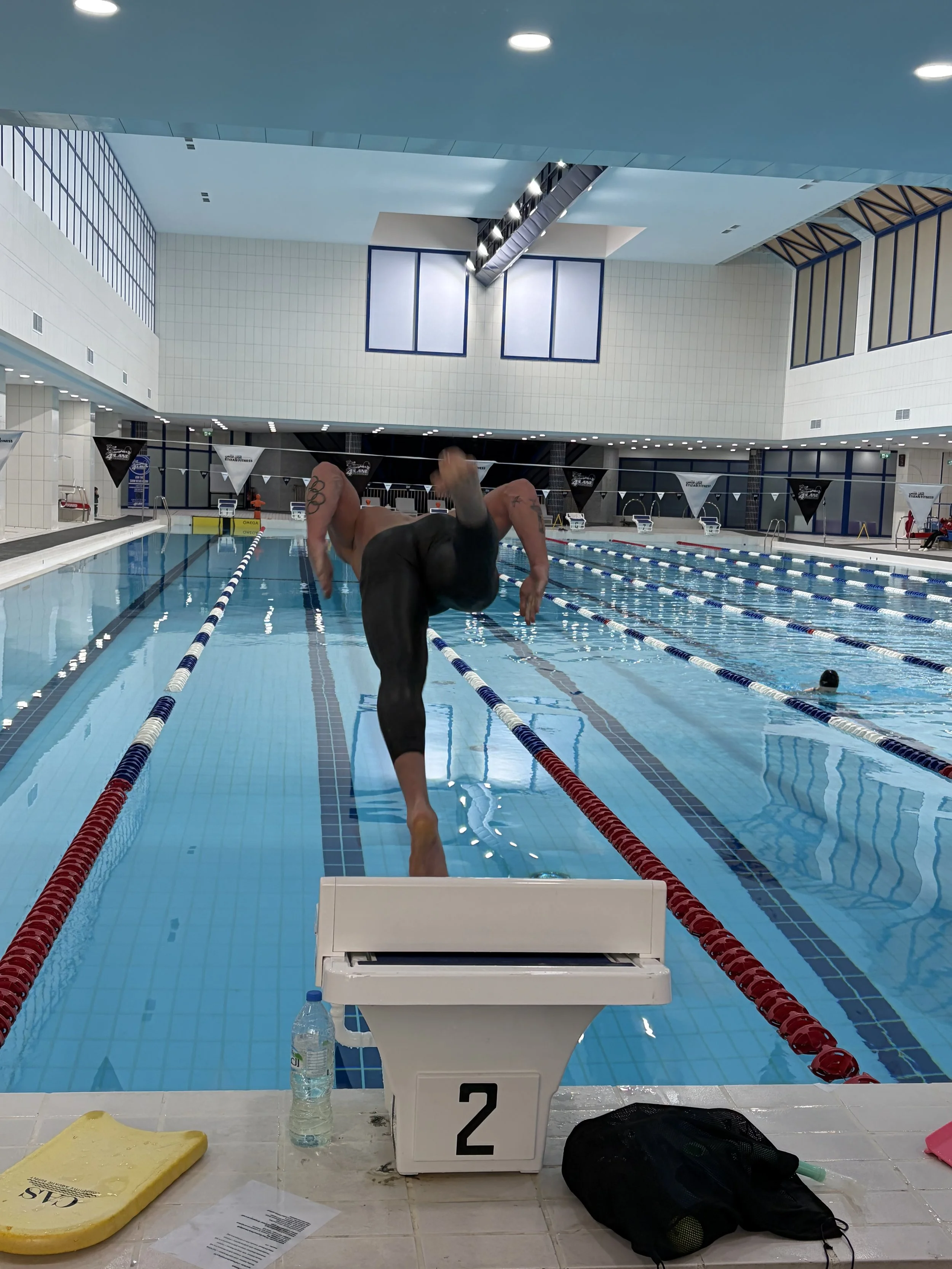
Exceptional rear-leg power.
His back leg contributes a huge amount of propulsion, allowing him to leave the blocks with tremendous acceleration rather than simply pushing off the front foot.
A clean, aggressive entry. He enters through a small hole with almost no splash or unnecessary drag. That means he carries more of his block speed into the water.
He holds his line. Instead of rushing into the dolphin kicks, he lets the speed from the dive travel. The fastest part of the race is often the speed you generate from the blocks—Ben protects that speed.
His transition is seamless. Dive → streamline → dolphin kick → breakout all flow together. There are no pauses or abrupt changes in body position that bleed velocity.
He wins the first 15 meters. In a 50 freestyle, that’s a massive psychological advantage. By the breakout, many swimmers are already chasing him instead of racing their own plan.
Confidence amplifies everything. Ben knows his start is world-class, and so do his competitors. That confidence lets him attack the race, while others can become reactive the moment they see him ahead.
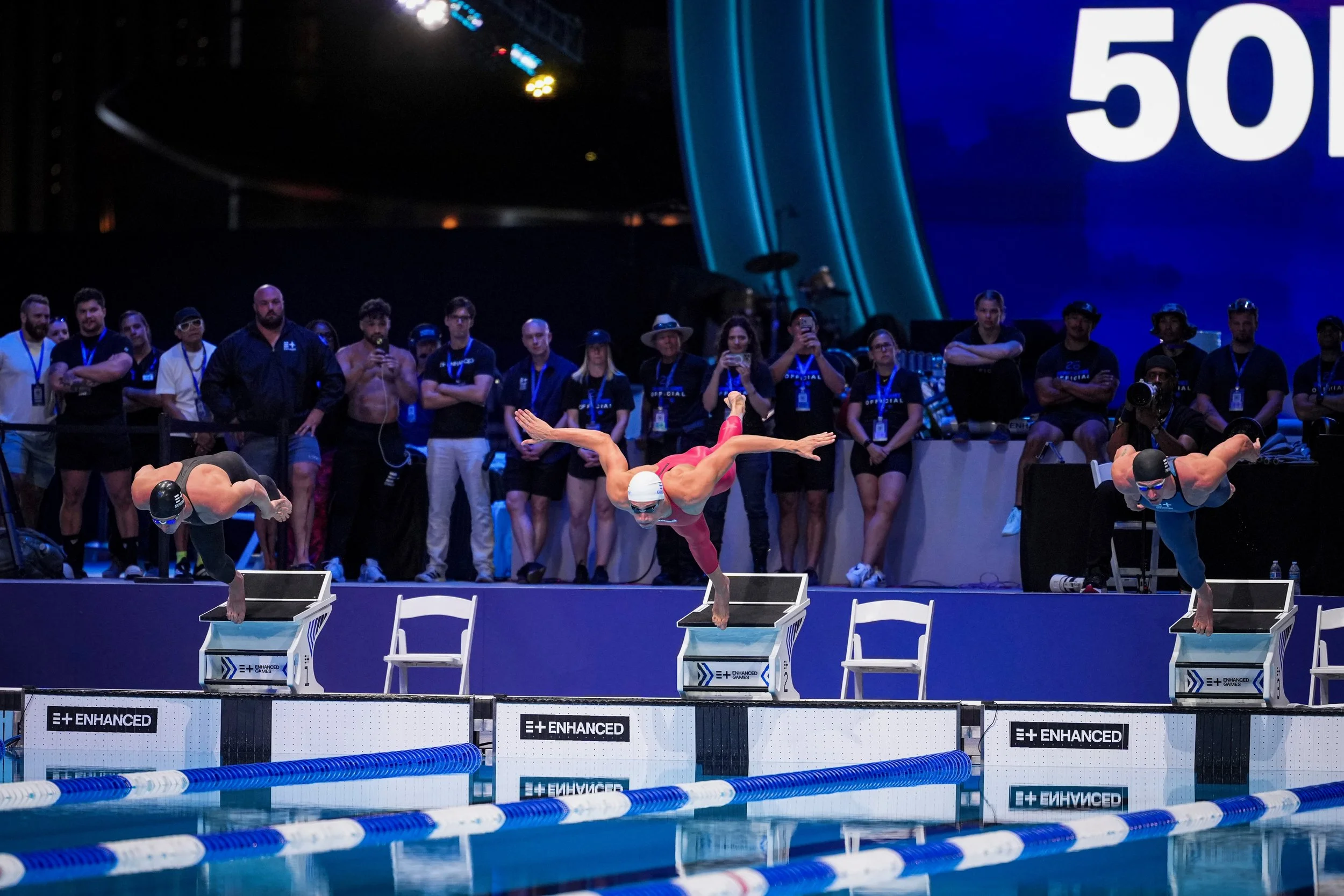
The dive starts before you leave the block. The best setups allow three things:
A fast reaction.
Maximum horizontal force.
A clean line into the water with minimal drag.
A good checkpoint is this: If your setup lets you push hard, project forward, and enter through a small hole in the water without making adjustments in the air, you’re in a great position.
Looking for top end speed workouts or equipment? Visit Sprint Revolution to find all your speed needs.
